
Skip to Content
Votre panier
Votre panier
Votre panier est vide

A STONE WALL IN THE KITCHEN

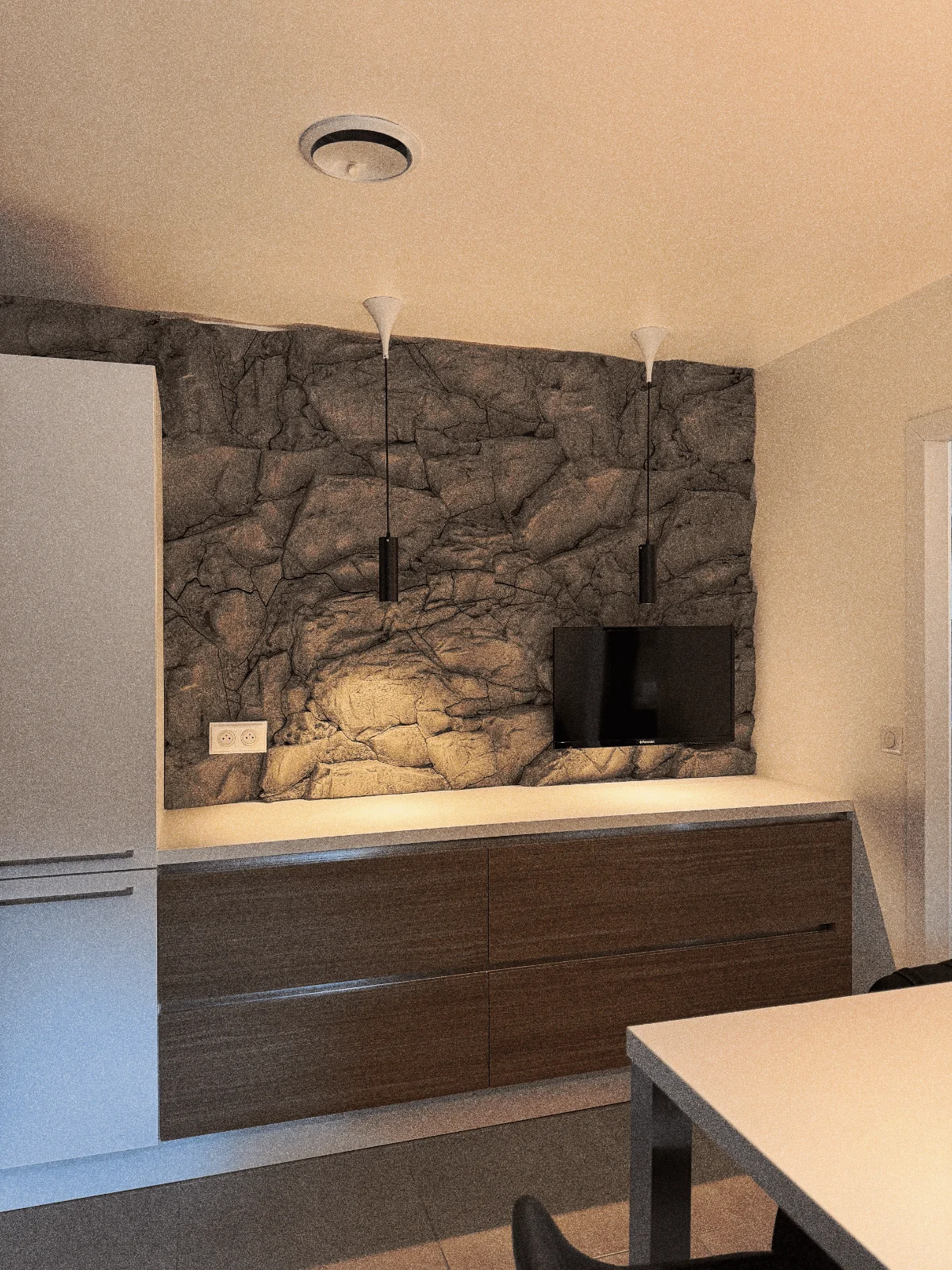
A stone wall in a kitchen goes on the perimeter walls, never as a splashback and never right next to a hob or an oven. That is the only restriction, and it comes down to splashes and heat rather than to how the product holds up. Everywhere else in the room, the Óros decorative panel is glued onto the existing wall: 1.38 m² covered per panel, 13 kg, up to 85 mm of depth, in mineral resin over a rigid core.


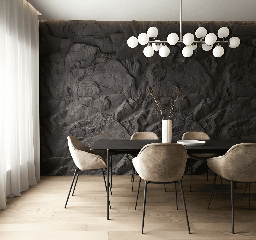
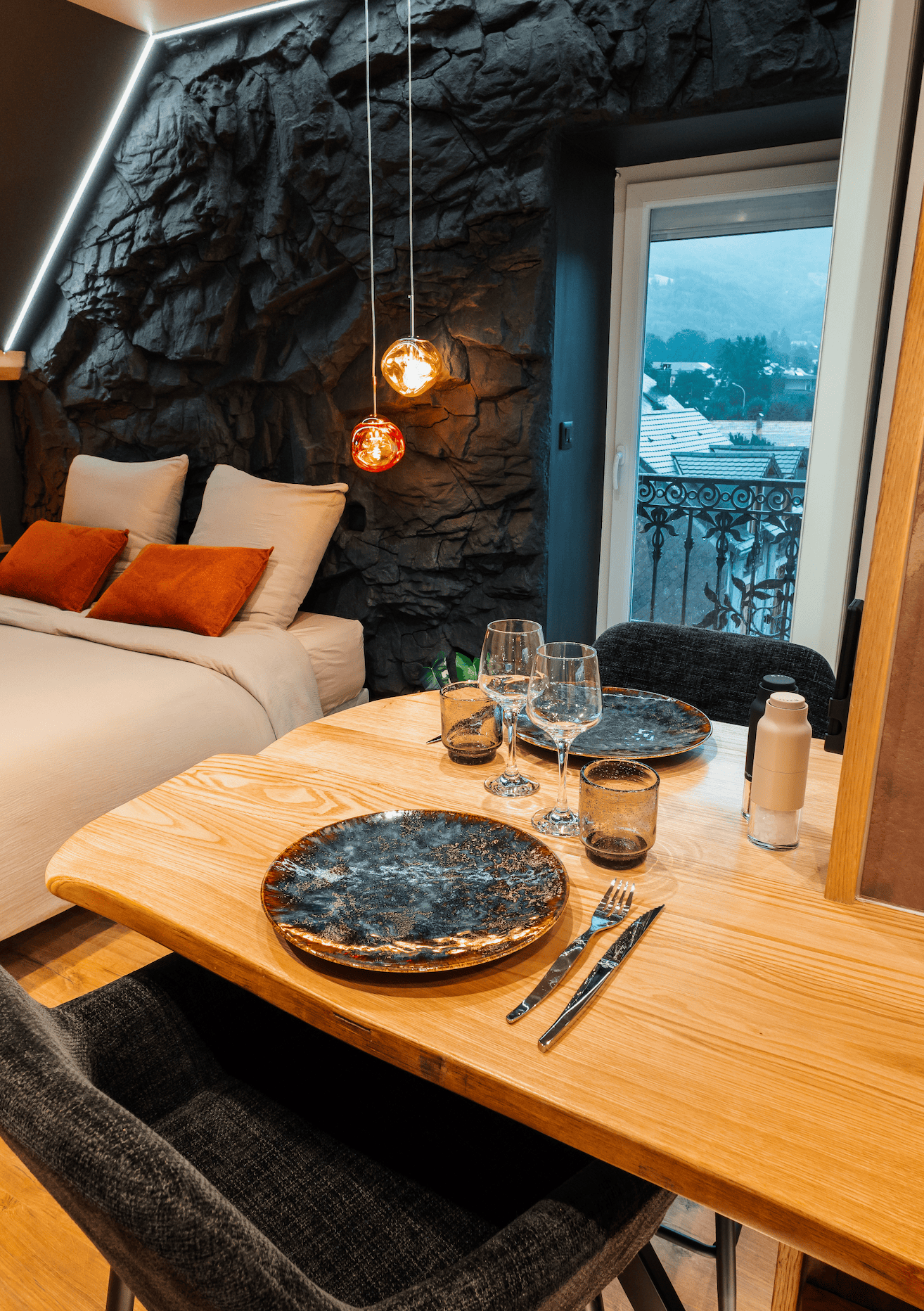
Kitchen dining nook clad in stone effect wall cladding

WHERE TO PUT A STONE WALL IN A KITCHEN

Four spots work. The wall of the dining area, when the kitchen includes a table or a breakfast bar. The back wall facing the island, which becomes the main view while you cook. The stretch of wall that links the kitchen to the living room in an open-plan space, where the material ties the two zones together. And the framing of a glazed partition or a doorway, where the texture gives thickness to an opening. What these four have in common: they are all away from the hob and outside the splash zone.


The kitchen is the smoothest room in the house. Lacquered or laminate fronts, stainless steel, a polished worktop, tiles, appliances: everything in it is flat, reflective and geometric. That is what makes the contrast with a mineral wall stronger here than anywhere else. A textured wall does not complement a modern kitchen; it contradicts it, and that is exactly what works.

The contrast also plays out in the light. Kitchen surfaces bounce light back; a rock face absorbs it and breaks it into shadows. On a back wall facing the island, the difference shows as soon as the light comes in at an angle, from a side window or an offset pendant. A ceiling light in the middle of the room, on the other hand, hits the wall head-on and flattens the texture.

WHY A STONE-EFFECT PANEL IN A KITCHEN

A kitchen is already fitted, equipped and plumbed in: it is the room where building work is least welcome. Óros installation is dry, with no mortar, no water, no demolition and no rubble. The panel is glued onto the existing finish, with nothing stripped out, which avoids having to empty the room or put it out of use for more than a day.

On maintenance, a kitchen brings one requirement the other rooms do not: grease film. Even well away from the hob, a kitchen wall ends up picking some up. The panel cleans with a soft sponge and soapy water, with no harsh degreaser, no solvent and no abrasive product, all of which would attack the finish. For routine dusting, a vacuum with a brush attachment remains the most effective on a textured surface.

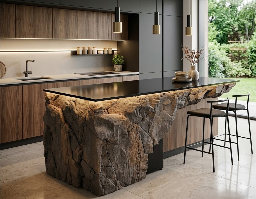
Kitchen with a stone wall built from Óros panels

INSTALLING YOUR ÓROS PANEL: WHAT TO KNOW

Installation is within reach of a DIYer with a jigsaw and a caulking gun. The panel is glued straight onto the existing wall, with no stripping out and no building work, on plasterboard, wood, tile, concrete and painted surfaces. The substrate simply needs to be dust-free, dry and sound. KÓLLA adhesive has enough initial grab to hold the panel as soon as you press it on by hand: no props, nothing to hold in place while it cures.

The full sequence, from setting out to finishing, is detailed in our installation guide, with videos for each stage and the installation manual available to download. For upkeep, a vacuum with a brush attachment or a slightly damp sponge is enough; avoid dry cloths and scouring pads, which catch in the texture.

Parallax rock
This will generate the product slider